
ZIH-Colloquium 2026

Table of contents
The ZIH colloquium is a public event and takes place usually the 4th Thursday of each month. Below you will find the current and former dates with all necessary information. You are cordially invited!
2 July 2026, 3:00 p.m., WIL A317 / Online BBB
Prof. Dr. Daniel Caviedes-Voullième (Faculty of Civil Engineering - TUD Dresden University of Technology) - "SERGHEI: performance-portable hydrodynamic and hydrological simulation in the exascale era"
The Simulation EnviRonment for Geomorphology, Hydrodynamics and Ecohydrology in Integrated form (SERGHEI) is an open-source model framework which couples a variety of solvers for environmental processes driven by hydrodynamics. It addresses hydrodynamic fluxes on the surface and the soil subsurface, as well as transport phenomena, relying on both Eulerian and Lagrangian solvers. Similarly, it also brings in other relevant environmental processes such as sediment transport and vegetation interactions. Aiming at performance-portability, it was developed from the start on Kokkos, and is currently being continuously developed by a growing international team.
In this talk I will introduce SERGHEI and its goals, showcase some of its scientific features and applications, and report some of experiences implementing and testing it. Additionally, we will report on ongoing investigations of the performance-portability and scalability of SERGHEI on exascale systems, as well as experimental development towards malleability, all motivated by already known issues arising in the scientific use of SERGHEI.
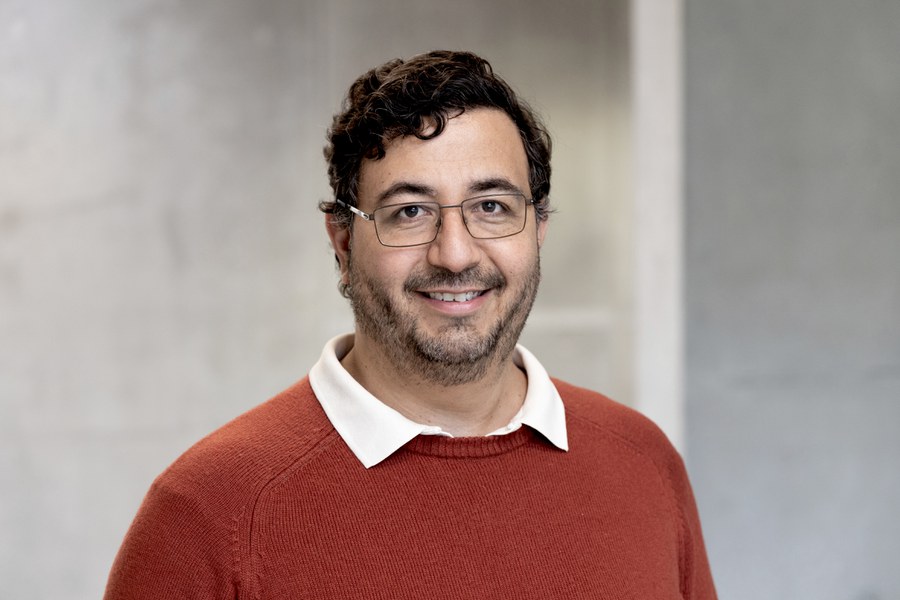
Prof. Dr. Daniel Caviedes-Voullième
Prof. Dr. Caviedes-Voullième earned a civil engineering degree from the University of Costa Rica. He then pursued further studies, obtaining a PhD in computational fluid dynamics from the University of Zaragoza (Spain). Since, he has worked as a postdoctoral researcher at the University of Sheffield (UK) and the Brandeburgische Technische Universität Cottbus-Senftenberg. He has since lead the Simulation and Data Lab Terrestrial Systems from the Jülich Supercomputing Centre, and since 2026 leads the Chair for Environmental Fluid Dynamics and Modeling at TU Dresden. His research is centered around high-performing, performance-portable and scalable numerical solvers for hydrodynamics and hydrology, and their application for environmental hydraulics and hydrology across scales.
28 May 2026, 3:00 p.m., N63 A.103 / Online BBB
Dr. Fridtjof Brauns (MPI–PKS and MPI–CBG) - "Self-organization of active epithelial mechanics" slides
Shape changes of epithelia during animal development, such as convergent extension, are achieved through the concerted mechanical activity of individual cells. While much is known about the corresponding large-scale tissue flow and its genetic drivers, fundamental questions regarding local control of contractile activity on the cellular scale and its embryo-scale coordination remain open. To address these questions, we develop a quantitative, model-based analysis framework to relate cell geometry to local tension in recently obtained time-lapse imaging data of gastrulating Drosophila embryos. This analysis systematically decomposes cell shape changes and T1 rearrangements into internally driven, active, and externally driven, passive, contributions. Our analysis provides evidence that germ band extension is driven by active T1 processes that self-organize through positive feedback acting on junctional tensions. This mechanical self-organization allows the tissue to remodel internally, to change shape like a fluid, while resisting external forces, like a solid. Together our findings explain how controlled tissue shape change emerges from the interplay of bottom-up local self-organization with the top-down, embryo-scale regulation by gene expression.
Fridtjof Brauns
Fridtjof earned his PhD in Physics at LMU Munich under the supervision of Prof. Erwin Frey. He then spent four years as a Postdoctoral Fellow at the Kavli Institute for Theoretical Physics in Santa Barbara, California. Since 2025, Fridtjof leads a Research Group at MPI–PKS and MPI–CBG. His work focusses on the physical principles that biology uses to generate forms and patterns.
20 May 2026, 3:00 p.m., N63 A.103/ Online BBB
Dr. M. Humayun Kabir (Mathematical and Computational Biology (MCB) Research Group, Department of Mathematics, Jahangirnagar University, Savar, Dhaka 1342, Bangladesh) - „Model-aided Understanding of the Spread of Agriculture in the Neolithic Age."
The archaeological study of the Neolithic age indicates that the spread of agriculture involved nomadic foraging as a gradual transition across regions. The spreading velocity of agriculture is roughly constant, according to archaeological evidence of the Neolithic transition. Many theoretical attempts have been made to understand such a phenomenon through mathematical modeling. Existing models of the spread of agriculture indicate that expansion velocity is faster than the observed rate. To understand this difference, we propose a three-component reaction-diffusion/ODE system involving two types of farmers: sedentary and migratory. Moreover, we introduce the influence of farming technology on the spread of agriculture in the Neolithic age. We aim to study the relationship between the expanding velocity and farming technology.
In this talk, we focus on the one-dimensional traveling wave solutions with minimal velocity when the expanding pattern of farmers is radially symmetric. Finally, our model suggests that the minimal velocity of traveling waves explains the spreading velocity of agriculture when the expanding pattern exhibits radial symmetry. Numerical simulations reveal that the minimal velocity of traveling wave solutions decreases as farming technology advances. Furthermore, we investigate the planar stability of the minimal traveling waves and subsequently the occurrence of two-dimensional traveling wave solutions in the context of the development of farming technology.
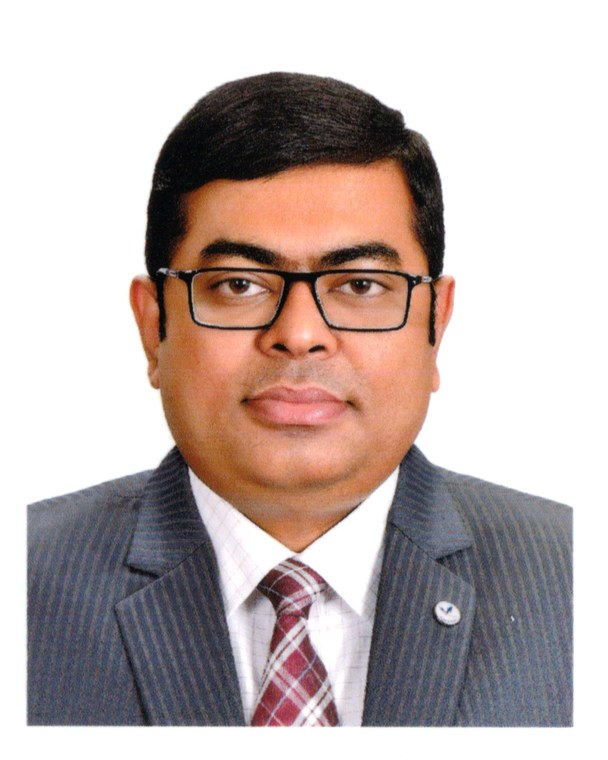
M. Humayun Kabir
M. Humayun Kabir earned his Ph.D. in Mathematical Sciences from Meiji University, Japan, under the supervision of Prof. Masayasu Mimura. He has been a Visiting Research Fellow at the Center for Mathematical Modeling & Applications at Meiji University since April 2018. Humayun leads the Mathematical and Computational Biology Research Group at the Department of Mathematics, Jahangirnagar University, Bangladesh. His research interests include a mathematical model-aided understanding of biological phenomena, particularly mathematical ecology, population dynamics, reaction-diffusion equations, and pattern formation. Currently, Dr. Kabir is serving as the secretary of the Bangladesh Mathematical Society and the Bangladesh Society for Mathematical Biology.
30 April 2026, 3:00 p.m., WIL A317 / Online BBB
Oliver Franzke (Double Fine Productions - Xbox Game Studios) - "Parallel Computing in Video Games" slides
Modern video games are among the most complex real-time parallel systems in consumer computing, combining SIMD, MIMD, and pipeline parallelism within a typical frame budget of 16.6ms on heterogeneous hardware. This talk begins with a brief look at how the exponential growth of output complexity across console generations - in graphics, audio, and CPU throughput - drove the transition from serial to massively parallel architectures. We then examine the domain-specific parallelism of the GPU and contrast its data-parallel strengths with gameplay logic, where circular dependencies, shared mutable state, and unpredictable memory access patterns pose fundamental challenges to parallelization. Using Unreal Engine as a practical case study, we explore the parallelization models and synchronization techniques a modern game engine employs to orchestrate sequential and parallel workloads across CPU threads and GPU under real-time constraints.
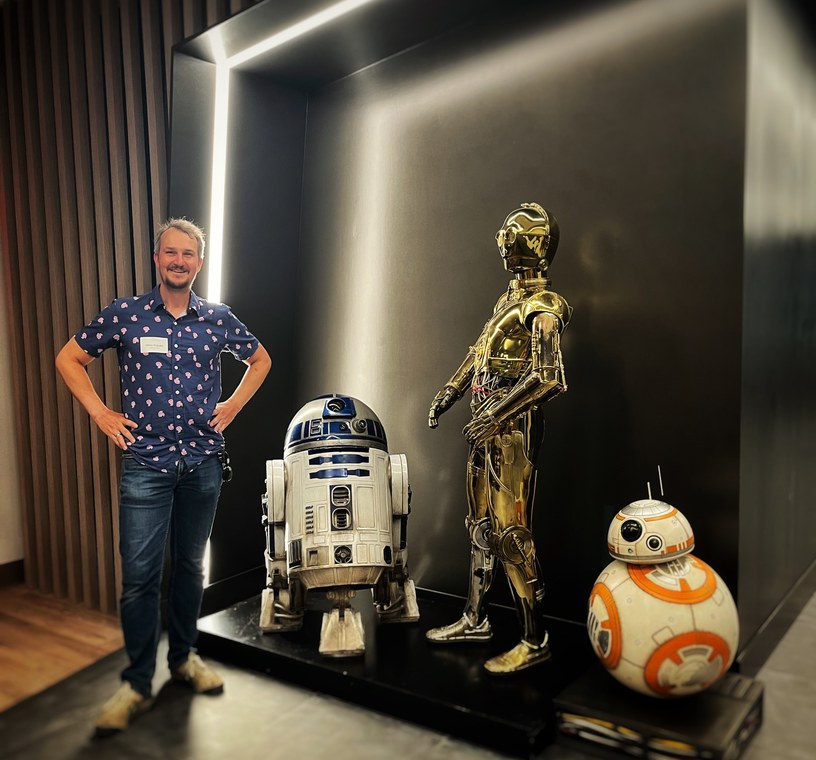
Oliver Franzke
Oliver Franzke is a Principal Engineer at Double Fine Productions (Xbox Game Studios) with nearly 25 years of professional experience in the games industry. Across more than 20 shipped titles at studios including LucasArts, Sony, and Double Fine, he has worked on graphics, engine systems, and tools - from the Monkey Island Special Editions to Broken Age, for which he was Lead Programmer. Oliver holds a Diplom in Media Computer Science from TU Dresden, graduating with the highest distinction and receiving the Lohrmann Medal for outstanding academic achievement.
23 April 2026, 3:00 p.m., WIL A317/ Online BBB
Prof. Dr. Siegfried Raasch (Department of Meteorology and Climatology, IMUK, Leibniz University Hannover, Germany; Pecanode GmbH) - "The PALM Model System Release 25.10 - An LES Code for Basic and Environmental Research – Capabilities and Recent Applications" slides
Originally applied to study the convective atmospheric boundary layer (CBL), largeeddy
simulation (LES) is now used in many areas of science. This is mainly due to a
substantial increase in available computing resources. State-of-the-art massively
parallel computers have opened the field to a wide variety of new applications. On
these machines, simulations with extremely large numerical grids - up to 40003 grid
points and beyond - are currently performed within acceptable timeframes. In
Meteorology, besides for the fundamental research on neutral and stable stratified
flows, where the typical eddy size is much smaller than in purely convectively driven
flows, LES is increasingly used for more applied topics such as air-pollution
modeling, flow around buildings, wind energy, and aircraft operation.
The LES model PALM (PArallelized LES Model), originally developed at the Leibniz
University Hannover (LUH), has become a community model over the last 10-15
years. Besides LUH, a team of national and international developers has significally
extended the original code with a wide range of features, including cloud physics,
chemistry, radiation, Lagrangian particles, and various nesting capabilities. A strong
focus is placed on the explicit representation of detailed surface processes, e.g.
resolved-scale vegetation and the complex geometry of buildings. PALM is well
optimized for state-of-the-art cache-based and vector processors and scales
efficiently up to 40.000 cores and beyond. The code is currently ported to run on
GPUs.
The talk will start with a short general introduction to atmospheric turbulence and
LES, and then provide an overview of PALM’s features, illustrated by results from
recent studies at IMUK.
Siegfried Raasch was a professor of theoretical meteorology at Leibniz University
Hannover until his retirement in 2024. He is now an employed by Pecanode GmbH,
where he continues to develop and maintain the PALM model, which he initially
began developing in 1997. His research interests focus on atmospheric boundary
layer turbulence, large-eddy simulation, and the optimization of numerical algorithms.
25 March 2026, 3:00 p.m., N63 A.103 / Online BBB
Dr. Jesse Veenvliet (Stembryogenesis Lab, Max Planck Institute of Molecular Cell Biology and Genetics, Dresden; Cluster of Excellence Physics of Life, TU Dresden; Center for Systems Biology Dresden) - „Building towards understanding — leveraging stem-cell-based embryo models to elucidate principles of development“
Our lab investigates the principles underlying robust formation of the mammalian body axes, which organize the future body plan. While gene-regulatory networks are well characterized, how micro-environmental inputs arising from the physiological micro-environment contribute to the robustness of axial patterning and morphogenesis remains unclear. This is largely due to the complexity and constraints of in vivo development. We use stem-cell-based embryo models, such as gastruloids and trunk-like structures, which combine scalability and ease of measurement and manipulation with in vivo-like patterning and morphogenesis, making them ideal to obtain quantitative, causal, mechanistic insights. We integrate embryo models with live imaging, omics, genetics, biophysics, and data science to uncover how interactions between the embryo model and its micro-environment drive robust morphogenesis.
Current research focuses on: (1) biophysical principles of axis elongation; (2) metabolic regulation of patterning and morphogenesis; (3) roles of extracellular matrix remodeling; (4) robustness in axial progenitor fate decisions; and (5) leveraging variation to predict and control embryo model behavior.
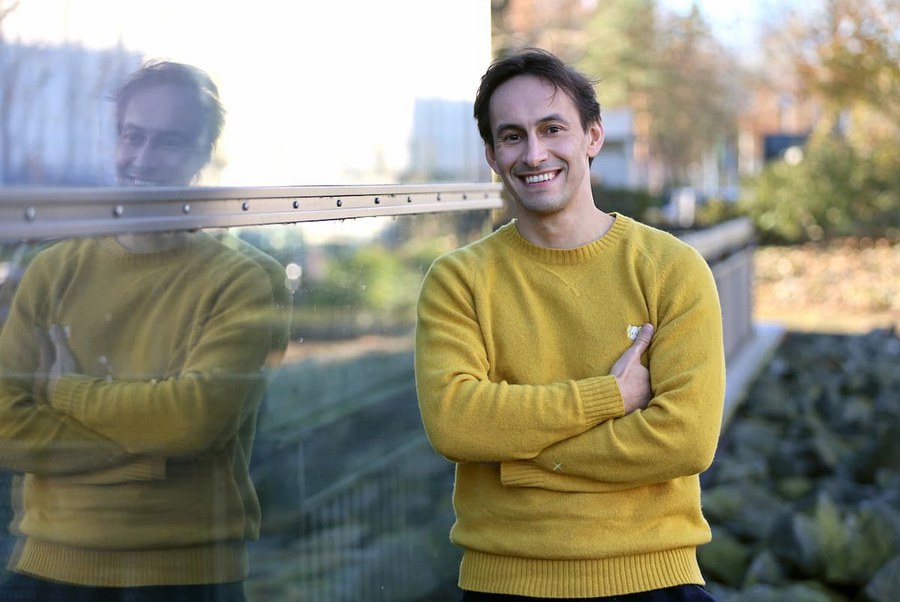
Jesse Veenvliet
Jesse Veenvliet studied Medicine at the Radboud University (Nijmegen), followed by an MSc in Experimental & Clinical Neuroscience at Utrecht University. He then did his PhD in the field of molecular and developmental neuroscience in the lab of Marten Smidt, at the Rudolf Magnus Institute in Utrecht and the Swammerdam Institute of Life Sciences in Amsterdam. For his postdoc, he joined the lab of Bernhard Herrmann at the Max Planck Institute for Molecular Genetics in Berlin, where he developed one of the first stem-cell-based models of early mammalian development. In May 2021 he moved to Dresden to start his independent lab at the Max Planck Institute of Molecular Cell Biology and Genetics. His group develops and uses mouse and human stem-cell-based embryo models to elucidate the principles governing robustness of mammalian body plan formation.
History: ZIH colloquia of the past years
History 2025
History 2024
History 2023
History 2022
History 2021
History 2019/2020
History 2018
History 2017
History 2016
History 2014/2015
History 2013
History 2012
History 2011
History 2010
History 2009
History 2008
History 1998 - 2007